Plastering a New Extension in Somerset: What to Expect Before You Fit Out
Planning an extension in Somerset or Dorset? What to expect from extension plastering, from boarding and backing coats to the final skim, done properly.
Getting the Plastering Right on Your Somerset Extension
A new extension is a big investment. The walls go up, the roof goes on, the windows get fitted, and then comes the point where the whole project either starts to look finished or starts to look rough. That point is plastering.
We plaster extensions across Somerset and Dorset, from kitchen extensions and garden rooms to garages and new builds. We know what the work involves, what can go wrong if it's rushed, and what a properly finished job looks and feels like.
This article walks you through the process honestly, so you know what to expect before you fit the kitchen, lay the flooring or pick the paint.
Why Extension Plastering Is Different from Replastering an Existing Room
Extensions present different challenges to standard internal replastering. The background is usually new, which means it can be porous and prone to suction. Blockwork, brick and boarded walls all behave differently under plaster, and getting the preparation wrong at this stage causes problems later, including cracking, hollow spots and poor adhesion.
New extensions also go through a drying-out period. Moisture from the construction process, the mortar and the floor slab all needs somewhere to go. Plaster applied before the structure has had a chance to dry can crack as that moisture escapes. We factor this in and advise on timing before we start.
The junction between your new extension and your existing house is another area that needs attention. Some movement between old and new structure is normal, and if that junction isn't handled properly in the plaster finish, you'll see a crack along the line where they meet. It's a small detail, but it makes a real difference to the result.
What the Process Looks Like, Start to Finish
Here's a straightforward run-through of how extension plastering typically works:
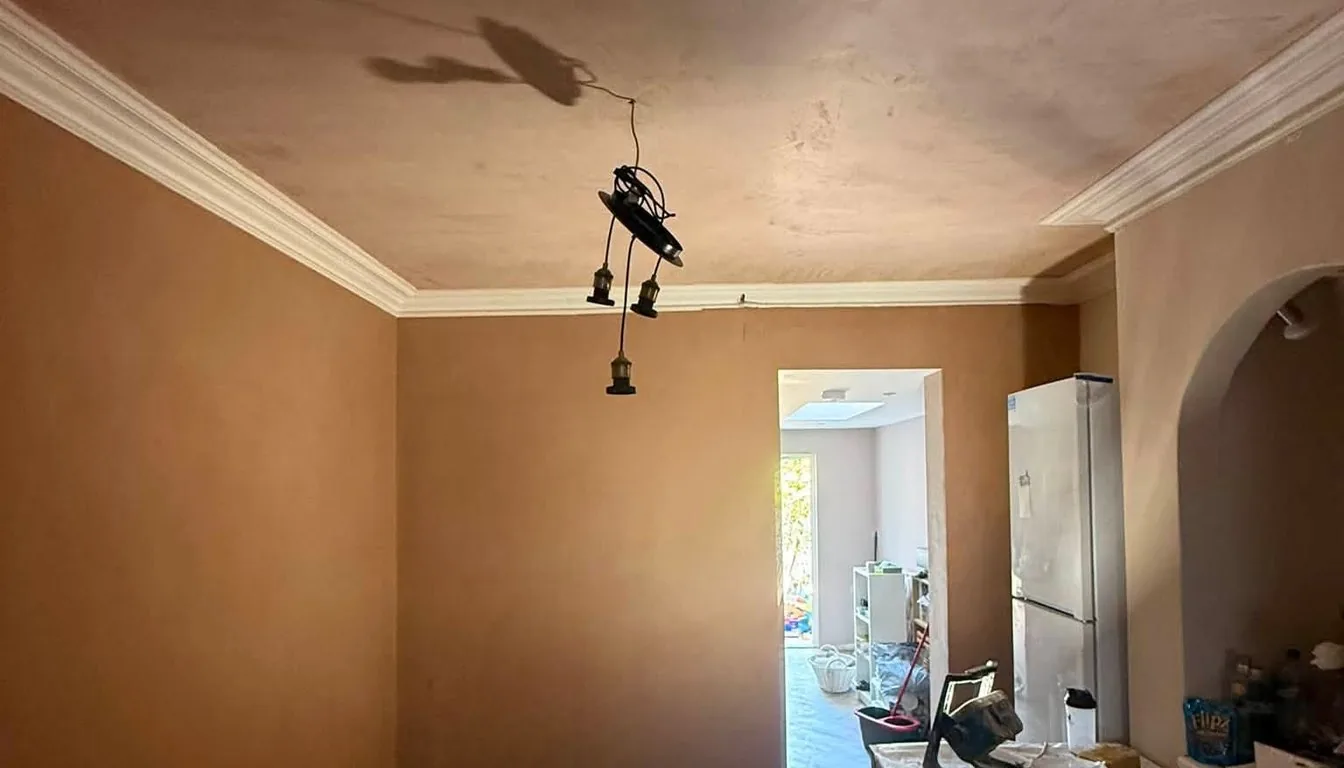
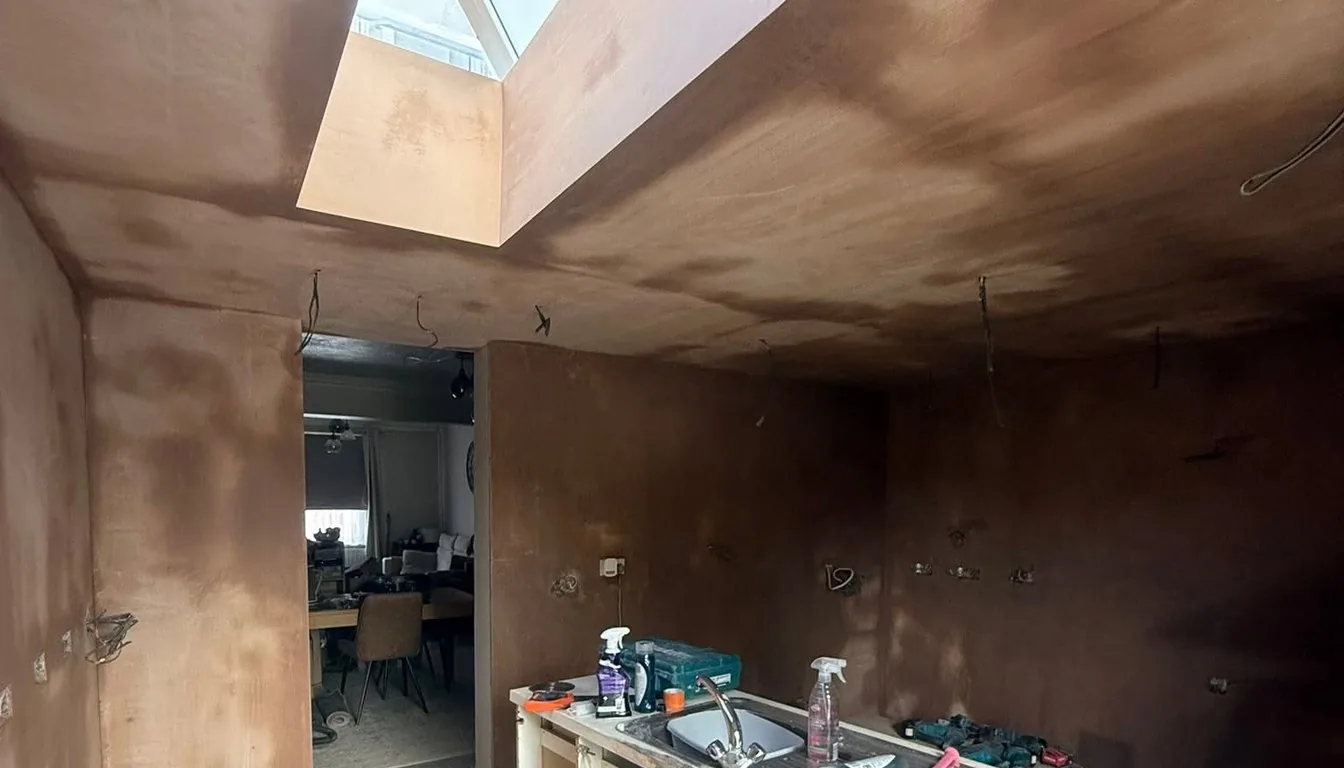
Preparation and boarding If the extension has a timber or steel frame, the walls and ceilings will need plasterboarding before plastering can begin. We fix the boards securely and scrim the joints. On blockwork or brick, we assess the surface and apply a suitable bonding agent to control suction and improve adhesion.
Backing coat On blockwork and uneven surfaces, a backing coat builds the wall out to a flat, true plane. It's not the finished surface, but it's what everything else relies on. Done well, it makes the skim coat straightforward. Done badly, it shows through.
Skim coat The final thin layer of finish plaster. This is what gets painted. A good skim is flat, smooth and tight, with no ridges, trowel marks or hollows. It takes real skill to get right consistently, especially on larger wall areas and ceilings.
Drying and handover New plaster needs to dry out fully before it's decorated. We'll let you know what to look for and how to help the drying along, particularly in the cooler months when ventilation matters more.
External Rendering on Extensions
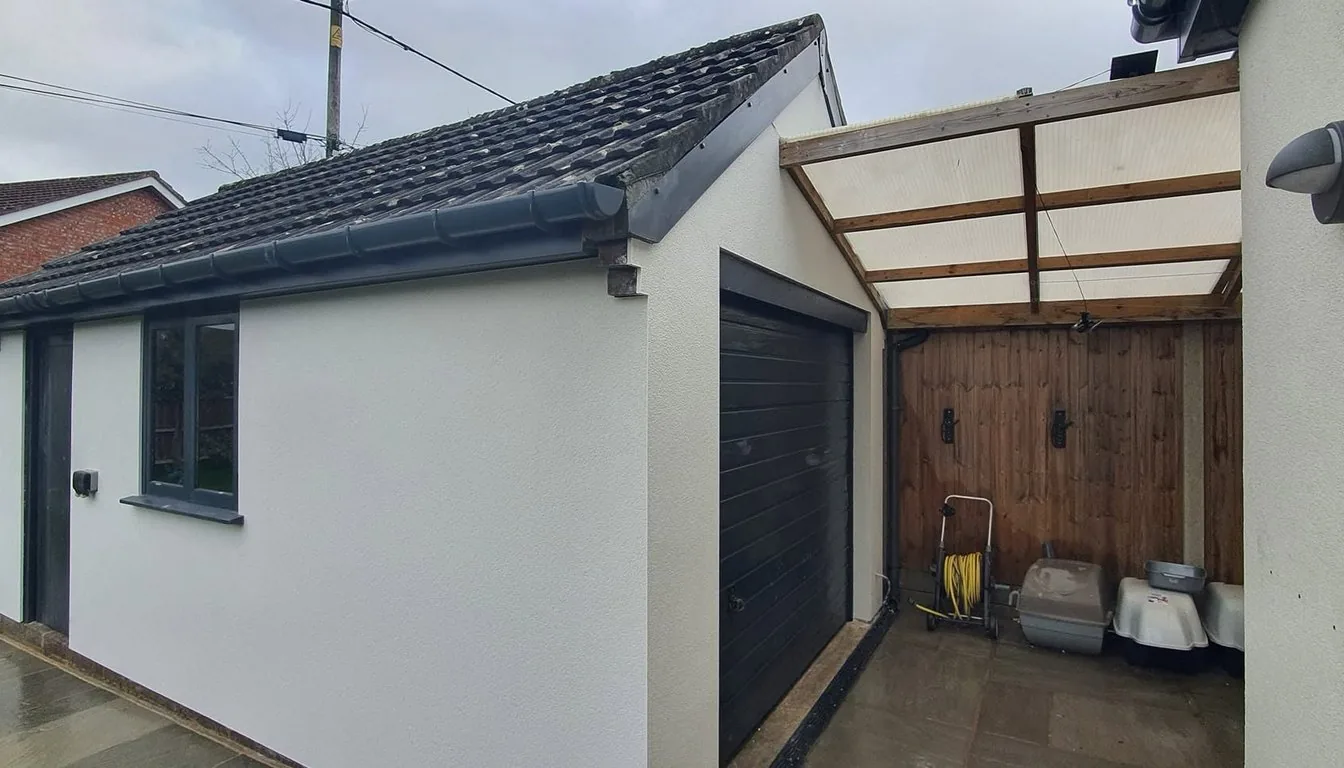
Many extensions also need external rendering, especially if the walls are blockwork or you want the extension to match or refresh the finish of the existing house. We carry out silicone render, spray cork render and traditional sand and cement render on extensions across Somerset and Dorset.
If you're not sure whether your extension needs rendering, or what finish would suit it, our article on Rendering vs Plastering: Which One Does Your Somerset Home Need? covers the differences clearly.
External render on a new extension needs a properly prepared surface and the right build-up of coats for the wall. We also fit beads at corners, reveals and edges, which give a clean, sharp finish and help control cracking.
What Our Customers Say
"Lewis recently plastered our new extension… his work is first class and did an excellent job." — Ricky Duke, via Facebook
First-class work on a new extension is exactly what we aim for on every job.
Common Mistakes to Avoid on Extension Plastering
These are the problems that show up when extension plastering hasn't been done properly. Worth knowing about before you get anyone in.
- Starting too soon. New blockwork needs time. Plastering over a wet structure leads to cracking and damp patches in the plaster later.
- Skipping the preparation. Bare blockwork is very porous. Without the right bonding agent or backing coat, the finish can pull away from the surface or dry too fast and crack.
- Ignoring the junctions. Where new and old structure meet, some movement is expected. A careful plasterer allows for this; a rushed job doesn't.
- Poor boarding. If plasterboard is fixed badly, with boards bowing or joints left unscrimmed, the finish coat will show those problems.
- Rushing the drying. Cranking the heating up to dry new plaster faster can cause it to crack. Slow and steady wins here.
If you're unsure about the state of the existing plaster in the rooms that connect to the extension, our article Can You Plaster Over Old Plaster? What Bridgwater Homeowners Need to Know is worth a read.
Garden Rooms and Garages: Plastering Beyond the Main House
Not every extension connects directly to the house. Garden rooms, home offices, garages and outbuildings all benefit from a proper plaster finish, and we treat them with the same care as any other job.
"Great service from start to finish, perfect work completed on our garden room. Would highly recommend." — Jake Arlow, via Facebook
Garden rooms are often built with speed in mind, but the plastering is where a garden room starts to feel like a proper usable space rather than a shed with windows. We make sure the walls are flat, smooth and ready to decorate, whatever the structure underneath.
Frequently Asked Questions About Extension Plastering in Somerset
What's the difference between skimming and full plastering on an extension? Skimming is a thin finish coat over a surface that's already flat and prepared, usually plasterboard. Full plastering builds the wall up from a rough background with a backing coat first, then finishes with a skim. On new extensions you often need both, depending on how the walls are built.
Does new extension plasterwork need special treatment before decorating? Yes. New plaster is porous, and painting it too soon or with full-strength paint can cause peeling or flaking. A mist coat of watered-down emulsion is the standard first step. We'll advise you on this when we hand over the job.
How do I know when my extension is ready to be plastered? The structure needs to be weathertight, with the roof on and the windows and doors fitted, and the blockwork or brickwork should have had time to dry out. If you're unsure, ask us. We're happy to come and look before agreeing a start.
Can you render the outside and plaster the inside of the same extension? Yes. We do both plastering and rendering, so one team can finish the inside and the outside of your extension.
We Cover Somerset and Dorset for Extension Plastering
We're based in Bridgwater and work across Somerset and Dorset on extension plastering, from small single-storey additions to new builds for builders and developers. Whether it's internal plastering, external rendering or both, quotes are free.
If you've got an extension in progress, or you're planning one and want to get the plastering sorted early, get in touch with us or call 07444 745495 and we'll talk through what you need.
“Great job from James Plastering and Rendering. Did a great job on our kitchen extension. Fast, careful and tidy, will definitely call on Lewis again for some more work.”