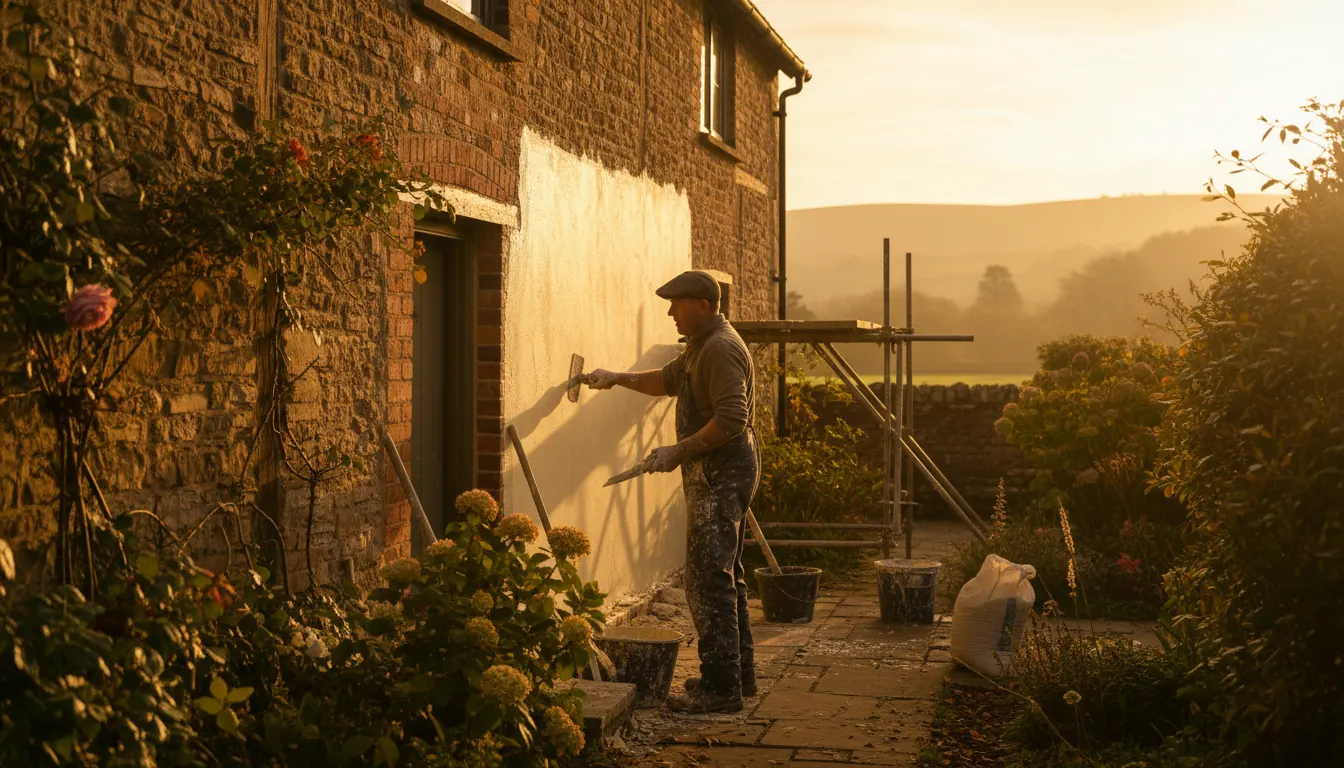
Replastering vs Re-Skimming: When to Refresh Your Walls and Ceilings in Bridgwater
Not sure whether your walls need a full replaster or just a re-skim? We explain the difference clearly, with advice for homes across Somerset and Dorset.
Two different jobs, one common confusion
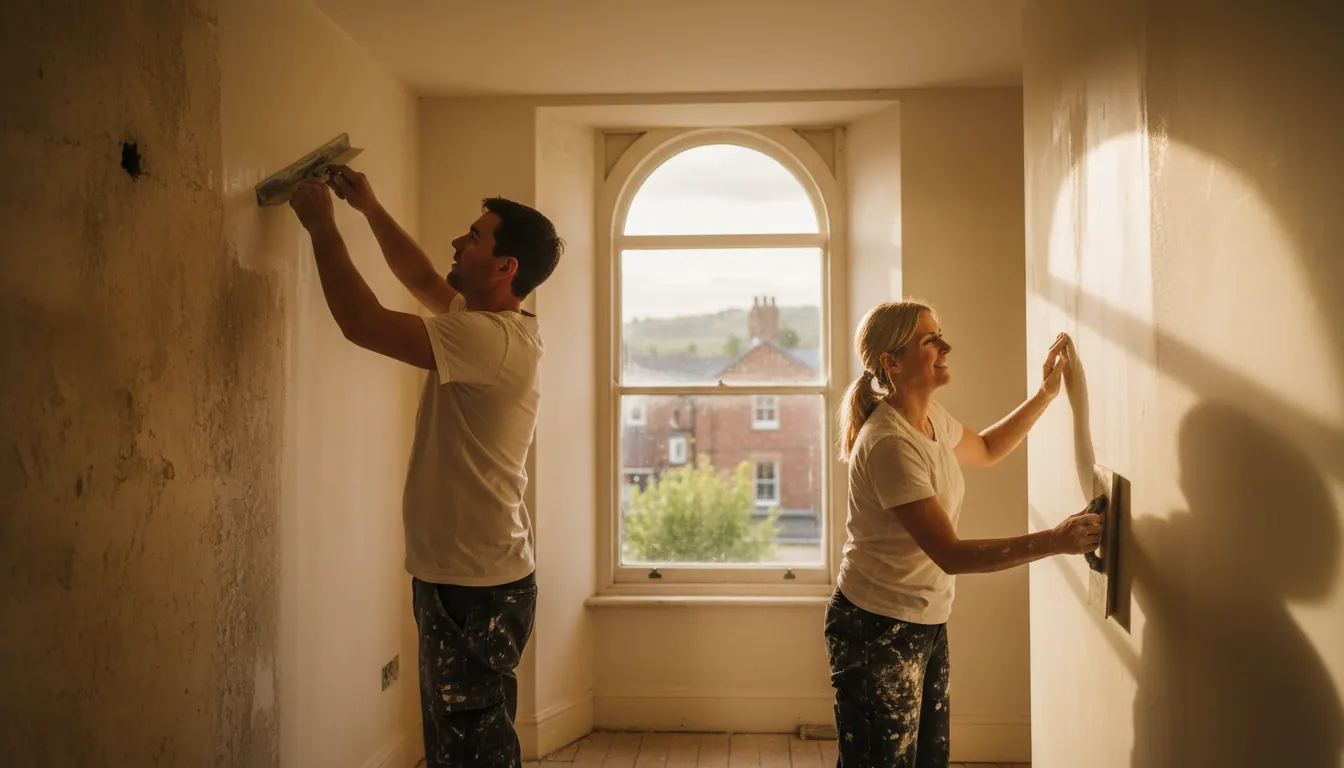
Plenty of homeowners across Somerset ring us unsure what they actually need. The walls look rough, the ceiling feels tired, or the plaster has started to blow and crack after a wet autumn. They know something needs doing, but the terms "replastering" and "re-skimming" get used interchangeably, and that can lead to either overspending on work that is not needed or, worse, patching over a problem that needs dealing with properly.
So here is a plain-English explanation of what each job involves, when one is right and the other is not, and how we approach these decisions for customers across Bridgwater, Taunton, Yeovil, Burnham-on-Sea and the wider Somerset and Dorset area.
What does re-skimming actually mean?
A re-skim (or skim coat) is a thin finishing layer of plaster applied over an existing surface. The idea is to restore a smooth, flat, paint-ready finish without stripping back to the bare wall or ceiling. If the underlying plaster or plasterboard is sound, a skim coat is often all that is needed.
Common situations where a re-skim is the right call:
- Walls that have been stripped of old wallpaper and left with a rough, damaged surface
- Ceilings that are sound but showing hairline cracks or a tired, uneven finish
- Rooms being refreshed before redecorating, where the structure underneath is still solid
- Plasterboard that has been boarded out and just needs finishing
The key thing here is the word "sound". If the base underneath is solid and well-adhered, a skim coat gives you a clean, hard finish ready for paint or wallpaper. It is a lighter job than full replastering, and for the right situation it is absolutely the correct choice.
So what is replastering, and when is it needed?
Replastering means removing the existing plaster back to the masonry or substrate, then applying fresh backing coats (sometimes called scratch coat and floating coat) before the final skim. It is a more involved job, and it is the right one when the existing plaster is beyond saving.
Signs that you need replastering rather than a re-skim:
- Blown plaster: tap the wall and it sounds hollow, or the surface feels soft and detached from the wall behind it
- Damp damage: plaster that has been saturated and has crumbled or lost its key
- Structural cracks: wider cracks that run through the full depth of the plaster, not just surface crazing
- Very old plaster: lime-based hair plaster on older solid-wall properties can eventually fail completely, especially after persistent damp
- Previous poor repairs: layers of badly applied filler or old plaster that have left the surface uneven beyond what a skim can correct
Older terraces and ex-council properties in Bridgwater and around Somerset often have walls that look like they need a quick skim but actually have blown or damp-affected plaster underneath. Skimming over a failed base will not hold. The skim coat will crack or lift, and you will be back to square one.
Plasterboard: do you always need to skim it?
This is a question we hear regularly. Someone has had boarding done, perhaps as part of a renovation or a new partition wall, and they wonder whether they can leave it unfinished.
Technically, you can leave plasterboard without plastering if you are using a specific dry-line finish system, but for a standard domestic interior, you would not want to. Unfinished plasterboard is fragile, absorbs moisture unevenly, and will not take paint or wallpaper well. A skim coat over the board gives you a hard, smooth surface that is far more durable and looks far better.
For new extensions and new-build work across Somerset, we always skim the boards as a matter of course. It finishes the job properly.
Is a skim coat the same as plastering?
Not quite, though the two are closely related. Plastering in the full sense refers to the whole process of applying plaster to a wall or ceiling, which can include multiple coats. A skim coat is specifically the thin finishing layer. Think of it this way: all re-skimming is a form of plastering, but not all plastering is just a re-skim.
When someone says "I need my walls plastered", they might mean a full replaster from scratch, or they might mean a re-skim over existing sound plaster. Part of our job when we come to look at a job is to work out which one is actually needed, rather than assuming one or the other.
What we see most often in Somerset homes
Across Bridgwater, Highbridge and the surrounding villages, a lot of the housing stock is older solid-wall construction or post-war cavity-wall builds. Both present their own challenges.
Older solid-wall properties can hold moisture differently from modern cavity-wall houses. After a wet Somerset autumn, it is not unusual to find plaster that has blown in patches, particularly on external walls. In these cases, the blown sections need to come off before any finishing work is done. Skimming over them simply does not work.
Post-war and 1970s/80s homes often have walls that are still fundamentally sound but show their age in the finish. These are frequently good candidates for a re-skim, once we have checked that the base is solid.
Ceilings are a slightly different story. A ceiling that has had a leak above it, even a minor one from a gutter or roof issue, can look fine on the surface but have plaster that has lost its bond. We always check carefully before recommending a skim, because a ceiling that drops is a serious problem.
What our customers say
Charisma England left us this review after we completed a walls-and-ceiling job:
"Great job, walls and ceiling done in a couple of days and are smooth and soft and 100% better than before, would recommend very helpful as was unsure how plastering worked. All i need now is a paint :>)"
- Charisma England, via Google
That last line is exactly where you want to be at the end of a plaster job. Paint-ready, smooth, and done properly. Whether that takes a re-skim or a full replaster depends entirely on what the walls and ceilings are actually doing underneath.
How do you know which one you need?
Honestly, the best way is to have someone come and look. But here are some practical checks you can do yourself before you call:
- Tap the wall gently with your knuckle. A solid sound is good. A hollow, drum-like sound suggests the plaster has blown and lost its key to the wall.
- Press lightly on any cracked or bulging areas. If it flexes or feels soft, the plaster has failed.
- Check for staining or tide marks. These can point to moisture in the wall, which needs addressing before any plastering.
- Look at the crack pattern. Fine surface crazing is usually just the finish coat ageing. Wider cracks that follow a pattern or run through the depth of the plaster are more serious.
If you are in doubt, we are happy to come and take a look. We cover the whole of Somerset and Dorset, so whether you are in Taunton, Yeovil, Highbridge or anywhere across the two counties, just get in touch.
If you are also thinking about the outside of your property, our article on Rendering vs Plastering: Which One Does Your Somerset Home Need? covers how external render decisions work alongside internal plastering. And if you have a specific area that just needs a patch or a small repair, Small Plastering Jobs in Bridgwater: Patch Repairs, Re-Skims and Refresh Work explains when a smaller, targeted job makes sense.
Frequently asked questions
Is a skim coat the same as plastering?
A skim coat is a type of plastering, but the two terms are not identical. A skim coat is the thin finishing layer applied over an existing sound surface. Full plastering can involve removing old material and applying backing coats before the skim. Which you need depends on the condition of what is already there.
How do you know when walls need a full replaster rather than a re-skim?
The main indicator is whether the existing plaster is still bonded to the wall. Hollow-sounding plaster, soft or crumbling sections, damp damage, or plaster that is visibly lifting away from the surface all point to a full replaster. If the base is sound and the problem is just the surface finish, a re-skim is usually the right answer.
How often do walls and ceilings need replastering?
There is no fixed schedule. Well-applied plaster on a dry, stable wall can last for a very long time without needing attention beyond redecorating. What shortens its life is damp, impact damage, or a poor original application. Regular maintenance of gutters, roofs and external render helps protect internal plaster far more than any fixed replastering timetable.
Can you leave plasterboard without skimming it?
For most domestic interiors, no. Bare plasterboard does not accept paint or wallpaper well, is easily damaged, and looks unfinished. A skim coat over the boards gives a hard, smooth, durable surface. It is the standard way to finish a boarded wall or ceiling properly.
Get in touch for a free quote
If your walls or ceilings need attention and you are not sure whether you need a re-skim or a full replaster, we are happy to come and have a look. We cover Somerset and Dorset, and all quotes are free with no obligation. Get in touch with us here or call us on 07444 745495.
“Lewis and Ashton did an excellent job with the plastering. They are real hard workers, kept everything clean and tidy, and the finish is spot on. Highly recommend them!”