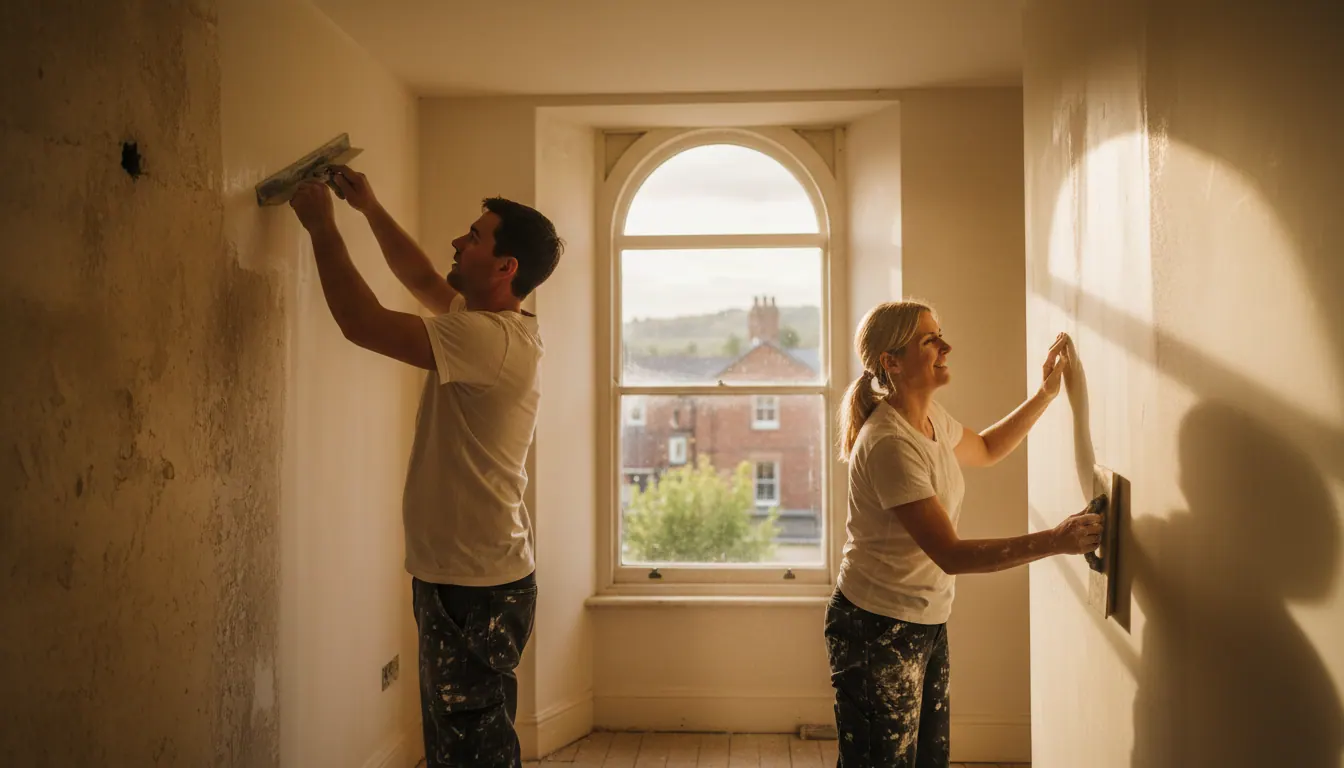
Stud Partitions and Dry Lining: Plastering Interior Walls in New Builds and Extensions
Planning dry lining or plasterboarding in Somerset or Dorset? We explain the process, when it makes sense, and how to get a clean finish every time.
Dry Lining and Plasterboarding: A Practical Guide for Somerset and Dorset Homes
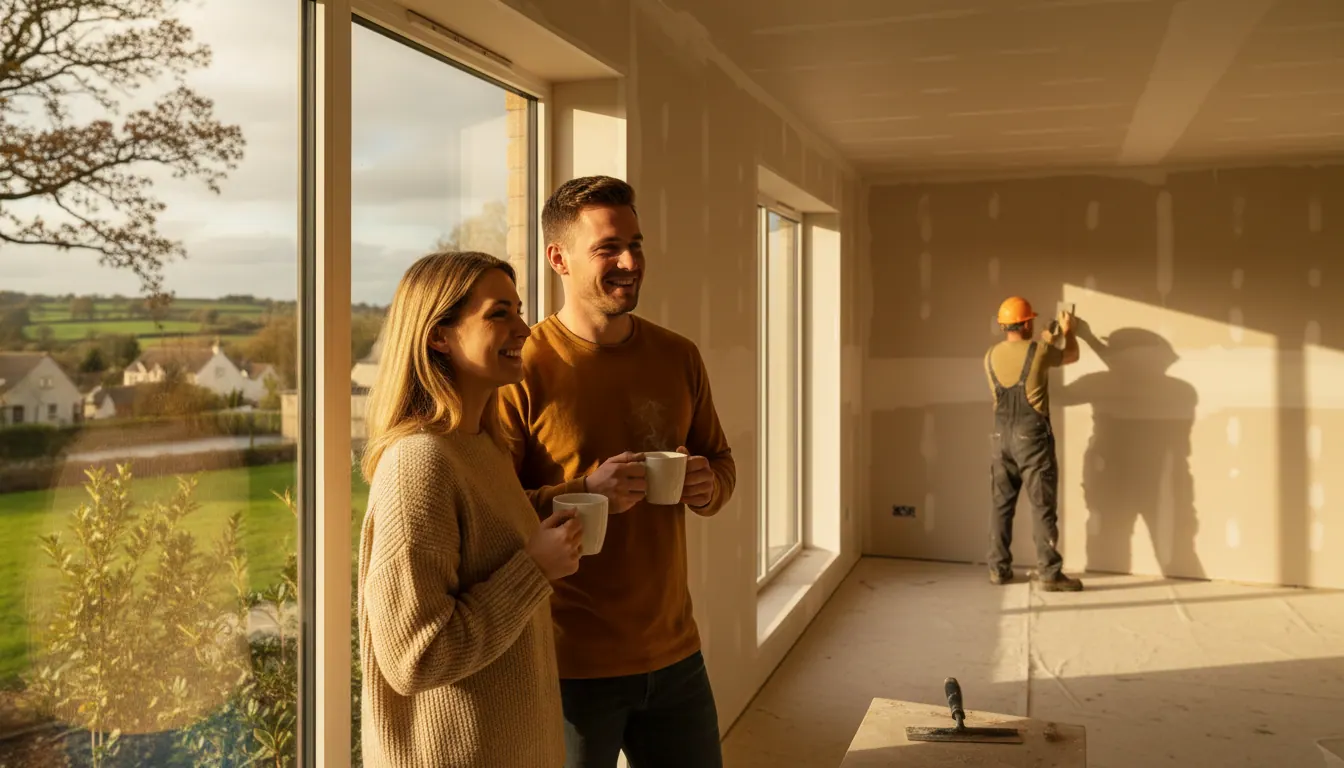
Bare brick walls, a new stud partition, a kitchen extension that needs finishing before the units go in. These are the moments when dry lining and plasterboarding become the most important job on site. Get it right and everything that follows, the skim coat, the paint, the tiles, sits perfectly. Rush it or skip steps and you will be chasing problems for years.
We cover dry lining and plasterboarding across Somerset and Dorset, from Bridgwater and Taunton to Yeovil, Burnham-on-Sea and Highbridge. Here is a straightforward guide to how the process works, when it is the right choice, and what to look out for.
What Is Dry Lining?
Dry lining is the process of fixing plasterboard to walls or ceilings without using a traditional sand-and-plaster backing coat. The board is fixed directly to timber battens, metal framing or directly bonded to a masonry wall, then the joints and surface are finished ready for a skim coat of finishing plaster.
The result is a smooth, flat, paintable wall surface achieved without the weight, drying time and complexity of traditional multi-coat plastering on every surface.
It is one of the most common interior finishing methods in new builds, extensions and renovation projects across Somerset. It is also increasingly common in older homes where walls have been damaged, where insulation needs to sit behind the board, or where a stud partition is being added to divide a room.
When Does Dry Lining Make Sense?
There is no single answer. The right approach depends on the building, the wall type and what the finished room needs to do. That said, here are the situations where dry lining is typically the practical choice.
New extensions and new builds. Plasterboard on timber or metal studwork is standard practice. The structure is built to take it, and it gives a consistent surface ready for skimming.
Adding stud partitions. If you are dividing a room, creating an en suite, or adding a home office space, a timber or metal stud frame is boarded on both sides and then skimmed. It is a clean, efficient way to create a new wall.
Older solid walls that need a fresh surface. Rather than hacking off failed plaster and re-applying traditional coats, it is sometimes more practical to batten out the wall and board over it, especially where the underlying masonry is in good condition but the plaster face has failed.
Ceilings after leaks or damage. When a ceiling has been damaged by a leak or has deteriorated over time, boarding and re-skimming gives a flat, sound surface that is genuinely ready for decoration, not just patched over.
Bathroom and kitchen areas. Moisture-resistant board is available for rooms where condensation or splash is a factor. This is used before tiling or where the room will see regular humidity.
The Dry Lining Process: Step by Step
Understanding what actually happens on site helps you plan around the work and know what to expect.
1. Preparation. The existing surface or frame needs to be sound. If there is a timber stud frame, it needs to be plumb and properly fixed. If we are bonding board to a masonry wall, the wall needs to be clean, dry and free from loose material.
2. Cutting and fixing the boards. Boards are measured, cut and fixed to the frame or wall. Joints between boards are staggered to avoid continuous vertical lines. Fixings go in at the right centres to give a solid, rattle-free result.
3. Taping and jointing or skimming. On a standard domestic job, the boards are skimmed with a thin coat of finishing plaster across the whole surface. This fills any minor imperfections, covers the joints and gives a smooth, consistent finish ready for paint. On some commercial or new-build projects, a tape-and-jointing approach is used instead, but for most residential rooms in Somerset and Dorset, a full skim is the preferred finish.
4. Drying and readiness. Finishing plaster needs time to dry fully before painting or tiling. The room needs ventilation and should not be sealed up while the plaster is still green. We will always let you know when the surface is ready for the next trade.
What a Good Finish Actually Looks Like
A well-boarded and skimmed wall should be flat, with no visible joints, no ridges at the board edges and no hollows where the board has not been fixed tightly. The skim coat should be consistent in thickness, with no drag marks, trowel lines or thin patches.
Run a straight edge along the wall after the plaster has dried. It should sit flush without rocking. Hold a raking light across the surface. Minor texture from the trowel is normal and will disappear under paint. Obvious ridges, dips or shadows at the joints mean something has gone wrong.
We take the finish seriously. A clean, flat result is what makes the decorator's job straightforward and what makes the room look right when it is done.
What Our Customers Say
This review from Ricky in Westonzoyland, near Bridgwater, sums up what we aim for on every job:
"Lewis recently plastered our new extension in Westonzoyland, his work is first class and did an excellent job. I would definitely recommend them to anyone who needs plastering!! Thanks again"
- Ricky Duke, via Facebook
A new extension is exactly the kind of job where the boarding and plastering sets the tone for everything else. Get it right at this stage and the fit-out goes smoothly.
Dry Lining in Older Somerset Homes
Older terraces, bungalows and period houses across Somerset and Dorset often have solid masonry walls with traditional plaster that has been there for decades. When that plaster fails, bubbles or cracks, there is a decision to make.
In some cases, particularly with older lime-plastered walls, it is worth repairing or re-plastering in a breathable material. We have written about that in more detail in our article on lime render for older solid walls and why breathability matters in Somerset homes.
In other cases, where the wall is sound but the plaster face has simply had its day, dry lining with plasterboard on battens gives a fresh, flat surface without the disruption of hacking everything off. It is a practical solution for a living room, hallway or bedroom that needs to look right without a major rebuild.
The key is assessing what is behind the wall before deciding. We will always look at the condition of the existing structure before recommending an approach.
Boarding for Partitions and Commercial Spaces
Stud partitions are common in both domestic and commercial settings. A home office, an open-plan space being divided, a commercial unit being fitted out. The principle is the same: a frame is built (that part is not our trade), and we board, tape and skim the surfaces to a finish.
For commercial clients across Somerset and Dorset, we also carry out machine-applied plastering on larger areas where speed and consistency are important. Offices, retail fit-outs and new-build developments all benefit from a consistent approach across large wall and ceiling areas.
If you are a builder or developer working on a site in Somerset or Dorset and need a reliable plastering and boarding contractor to follow on from first fix, get in touch early. We can plan around your programme.
Frequently Asked Questions
What is the difference between dry lining and traditional plastering? Traditional plastering builds up the wall surface with one or more coats of sand and plaster or lime-based material applied directly to masonry. Dry lining fixes plasterboard to the wall or frame first, then applies a thin skim coat of finishing plaster over the top. Dry lining is faster to install and produces a consistent flat surface. Traditional plastering is often preferred on older solid walls where breathability matters, or where a thicker, more robust wall finish is needed.
Can you plaster over old plaster, or does it need to come off? Sometimes the old plaster can stay. If it is sound, well-bonded and not hollow, a re-skim over the top is possible after the surface has been prepared properly. If the plaster is hollow, blown or crumbling, it needs to come off before any new work goes on. Boarding over a failed plaster wall is another option if the wall itself is in good condition. We assess each situation individually rather than applying a blanket approach. Our article on replastering vs re-skimming in Bridgwater covers this in more detail.
Do I need moisture-resistant board in a bathroom or kitchen? For rooms that will be tiled, or where there is regular steam and condensation, moisture-resistant board is the right choice. It handles humidity better than standard board and provides a more stable surface for adhesive and tiles. We use the appropriate board type for the room and its intended use.
How do I prepare a room before the plasterer arrives? Clear the room as much as possible. Remove furniture, pictures and curtains. Cover anything that cannot be moved, as plastering generates dust and splashes. Make sure there is access to a water supply and that the room is reasonably warm and ventilated. If there is any existing damage, old fixings or loose plaster on the walls, let us know in advance so we can factor it into the work.
Get in Touch
If you are planning dry lining, plasterboarding or any plastering work across Somerset or Dorset, we are happy to come and look at the job and give you a free quote. No obligation, no hard sell. Just a straight answer about what the work involves and what you need.
Get in touch with us here or call us on 07444 745495.